







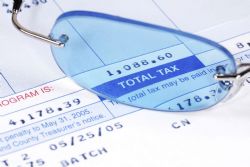

IBI - What is it ?
IBI (Impuesto sobre bienes inmuebles urbana / rustica) is a tax that is payable by the owners of all Spanish properties - regardless of their residential status.
The request for payment usually comes in the the form of a letter, or statement sent in the post between June and August of every year, and allows a window of around 6 weeks when payment can be made. Payment can still be made after that time, but a penalty charge will be applied and can be between 10 to 20%.
What is it for ?
The tax is payable to your local Town Hall, although in some areas it may be a third party who acts on behalf of the Town Hall who sends the letter.
The taxes go towards the upkeep of your community and infrastructure costs etc... and are similar to council taxes in the UK.
Note : A small minority of Town Halls do not send out written requests for payment. Legally, the responsibility lies with the owner to pay this tax, and as such you should ask your neighbours if yours is such a municipality. If this is the case you should take your escritura to the town hall and ask how much you owe them. Even if your Town Hall sent a bill last year, do not assume that this will always be the case - some Town Halls take advantage of this ruling by 'forgetting' to send out an IBI bill to catch out non-residents and apply the late penalty as means of increasing revenues.
Where can I pay it ?
The IBI Bill that you receive will advise you of how, where, and by what date you should make the payment. There are usually a number of Banks given where you can make the payment over the counter whether you are an account holder with the bank or not. The Bank will then stamp the letter to show receipt of payment.
Certain Town Halls, or collection agencies may make provision for payment of the tax online.
How is the Tax Calculated ?
The IBI is based on the 'Valor Catastral', or the rateable value of the property, which may bear little resemblance to what you believe the property to be worth, or what you actually paid for the property. The Valor Catastral is usually around 70% of the market value of your property.
However, this figure can be legally adjusted every eight years to allow for extra taxes to be accrued through appreciation in the value of the property.
Due to the sorry state of the finances of many Town Halls, many property owners have seen huge increases in the IBI they have been paying due to the authorities re-estimating the Valor Catastral.
Each Town hall works to a list of 'property values' (Ponencia de Valores) in determining the value of your property, and this value should take into account a number of factors : Rural or Urbanised land, Type of Property, Square meter age of Land and Build, Proximity to services, Infrastructure etc... are just some of them, although each Town Hall places a slightly different importance on each criteria.
Once the 'Valor Catastral' has been decided it will applied with the basic rate of around 0.3% for Rustic property and 0.5% for Agricultural (Figures can change very slightly from region to region). Towns over and above 5'000 residents can also levy a higher rate due to the additional facilities and infrastructure they usually provide.
What to check before buying a Property
You should ask to see the most recent IBI bills to check A.) That the payments have been made. The new owner is strictly responsible for outstanding payments, however all Abogados are supposed to check for this. If the payments have not been made then, as the new owner you can legally reclaim them from the vendor, but it is obviously better to avoid this headache if you can, and, B.) What the actual Valor Catastral is. If the payment seems quite low, then it may be wise to allow for and expect a sudden increase in the near future.
After buying a property
Check that your Abogado has registered your property with the Town Hall. If has has not, take along your Escritura and Passport or Residencia and register it. You have two months to do this before a fine may be applied for your not doing so.
The National Institute of Statistics recently estimated that over the last decade as many as 10'000 properties were unregistered with their local Ayuntamiento, due to their being either unoccupied or a ruin, however, Taxes and the resulting penalties - plus interest - were still applied and charged once the rightful owners were found.
There is a statute of limitations allowing a Town Hall 5 years to recover unpaid IBI Taxes and take legal action against property owners, so if you have not paid in recent years do not simply assume that you have got away with it !
If your property is empty ....
The tax will still apply! As opposed to having a discount applied like in the UK, certain municipalities may actually apply a surcharge. This is essentially to encourage property owners to open up their property to the rental market.
Likewise, if your property is a ruin this will also still apply, however, the IBI applied to such a property is unlikely to be great - especially if rustic.
If you disagree with your Valor Catastral
The first thing that you should do is check all documentation that both you and the town hall hold regarding your property and agree that you are referring to the same property. Mistakes can and do happen often, and this is something that is particularly common with regards to rustic property. Under these circumstances you should ensure that the Town Hall undertake to rectify the situation and send you a correct tax statement.
If you just believe that your bill is too high, or does not compare with any of your neighbours then you have 15 days from receiving the bill in which to appeal and ask for a revaluation.

